The Ultimate Guide to Odoo ERP Customization: Boost Your Company's Performance
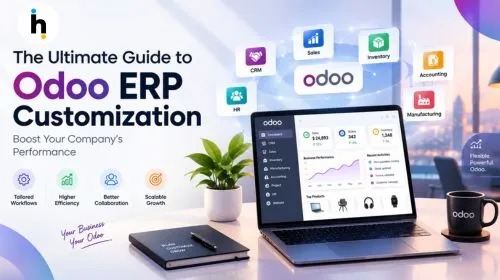
Every business has its own way of working. Even companies in the same industry may follow completely different processes for sales, inventory, accounting, manufacturing, customer service, and reporting. This is where standard ERP software can sometimes fall short. Odoo ERP customization helps businesses adapt the system around their actual processes instead of forcing employees to work around a rigid setup.
For growing companies in Bangalore, India, and other competitive markets, a well-planned Odoo setup can improve visibility, reduce repetitive work, and create smoother coordination between departments. However, customization should not mean changing everything. The objective is to make Odoo more useful while keeping it stable, scalable, and easy to maintain.
What Is Odoo ERP Customization?
Odoo ERP is a modular business management platform covering areas such as CRM, sales, accounting, inventory, manufacturing, HR, project management, and eCommerce. Because every organization has different operational requirements, businesses can modify existing features or develop new functionality.
Odoo Customisation may include modifying workflows, creating custom fields, developing reports, changing approval processes, improving dashboards, or adding business-specific automation.
For example, a distributor might require a multi-level approval process before large purchase orders are confirmed. A manufacturing company may need additional production controls, while an online retailer could require better synchronization between its ERP and Shopify store.
The right Odoo ERP Customization Services should solve a specific business problem rather than add unnecessary complexity.
When Should a Business Customize Odoo?
Customization makes sense when the standard Odoo functionality cannot efficiently support an important business process. Before starting development, businesses should first examine whether the requirement can be handled through configuration or an existing Odoo module.
A useful approach is to classify requirements into three areas:
- Configuration: Changes that can be handled through Odoo's existing settings.
- Customization: Changes requiring development or modification of functionality.
- Integration: Connecting Odoo with another application, platform, or service.
This distinction can prevent unnecessary development costs. A reliable Odoo Customization Company will normally analyse the requirement first rather than immediately recommending custom development.
Key Areas Where Odoo Customization Can Improve Performance
1. Sales and Odoo CRM
A customized Odoo CRM can help sales teams manage leads, opportunities, follow-ups, quotations, and customer information more effectively. Businesses can create industry-specific lead stages, automated activities, custom quotation workflows, and management dashboards. Instead of maintaining customer information across spreadsheets and separate applications, teams can work from a centralized system. This improves data consistency and gives managers a clearer view of the sales pipeline.
2. Inventory and Warehouse Operations
Inventory accuracy has a direct impact on customer satisfaction and operating costs. Odoo can be customized to support specific warehouse workflows, barcode processes, stock alerts, approval rules, and product classifications. For businesses handling large product volumes, small workflow improvements can save significant employee time over the course of a year.
3. Accounting and Reporting
Standard financial reports may not always match the way management wants to evaluate performance. Custom reports and dashboards can present information according to business requirements. For companies comparing Odoo pricing in India, the cost of customization should be considered alongside the value of these operational improvements. A cheaper implementation that provides limited visibility may cost more in the long run through manual reporting.
4. E-commerce and Odoo Shopify Integration
Many businesses operate both an ERP and an online store. Odoo Shopify integration can connect important information such as products, orders, customers, inventory, and fulfilment data. With effective Odoo Integration, employees can reduce manual data entry and avoid maintaining the same information in multiple systems. The integration should be designed around the company's actual data flow — simply connecting two systems is not enough; the synchronization rules, error handling, and ownership of data must also be clearly defined.
Odoo Implementation Comes Before Successful Customization
One of the most overlooked aspects of ERP projects is implementation planning. Odoo Implementation is not simply installing software. It involves understanding business processes, configuring modules, migrating information, training users, testing workflows, and preparing the system for day-to-day operations.
A capable Odoo Implementation Company should document requirements before development begins. This helps identify which processes should remain standard and where customization genuinely adds value. The expected Odoo Implementation Cost depends on factors such as the number of users, selected applications, data volume, integrations, custom development, training, and support requirements. Businesses should therefore evaluate the complete project scope rather than comparing software prices alone.
Odoo Migration: Moving Existing Data Safely
Businesses switching from another ERP or upgrading their existing environment often need Odoo Migration services. Data can come from spreadsheets, legacy ERP systems, accounting software, CRM platforms, or older Odoo databases.
Migration projects require careful planning because poor data quality can create problems after the new system goes live. Duplicate customers, outdated products, inconsistent tax information, and incomplete transaction records should be reviewed before migration. A sensible migration process includes data auditing, cleansing, mapping, testing, validation, and final migration. Backup procedures should also be established before any production changes are made.
Odoo Open Source and the Advantage of Flexibility
One reason companies choose Odoo Open Source is the flexibility it provides for organizations that need deeper control over their ERP environment. However, flexibility comes with responsibility. Custom modules need proper documentation, testing, security reviews, and maintenance. A customization that works today may require updates when the underlying Odoo version changes. This is why technical quality matters just as much as functionality.
How Hummingbird Innovations Approaches Odoo Customization
For the team at Hummingbird Innovations, the focus is on connecting technology decisions with measurable business requirements. A strong project normally starts with process discovery. The team identifies bottlenecks, reviews the existing Odoo environment, maps integrations, and prioritizes requirements. Development can then be carried out around clearly defined outcomes.
Whether the requirement involves Odoo Customization Services, implementation, integration, migration, or ongoing maintenance, the goal remains the same: create an ERP environment that employees can actually use efficiently. For businesses operating in Bangalore, India, this approach can be particularly useful when different departments have developed separate processes over time. Bringing those workflows into one structured ERP environment can improve coordination without forcing every department into an identical operating model.
Odoo Support AMC: Keeping the System Reliable
ERP projects do not end when the software goes live. Users will raise questions, business processes will change, integrations may need adjustments, and Odoo versions can introduce technical considerations. Odoo Support AMC provides ongoing assistance for troubleshooting, maintenance, minor enhancements, monitoring, and system-related support. Regular support is especially valuable for businesses with customized modules. Without proper maintenance, technical issues can gradually affect system performance and employee productivity.
A Practical Roadmap for Odoo ERP Customization
A successful customization project can follow a straightforward sequence:
- Start with business problems. Identify where employees lose time or where existing processes create errors.
- Review standard Odoo functionality. Confirm whether configuration or existing modules can solve the requirement.
- Prioritize customization. Focus development on processes that have genuine business value.
- Plan integrations and migration early. Data and third-party systems can significantly affect the project.
- Test with real workflows. Employees should validate the system before launch.
- Train users properly. Even a well-built ERP will underperform if employees do not understand how to use it.
- Plan ongoing support. Maintenance keeps custom functionality reliable as the business evolves.
Final Thoughts
The real value of Odoo ERP Customization Services is not the number of features added to an ERP. It is the improvement those features create in everyday operations. When customization is based on documented requirements, clean data, practical workflows, and long-term maintenance, Odoo can become a central operating platform rather than another software system employees have to manage.
For companies considering Odoo, the best starting point is therefore not asking "What can we customize?" Instead, ask "Which business process is slowing us down, and how can Odoo improve it?" That question leads to better decisions, controlled costs, and a more sustainable ERP environment. Hummingbird Innovations is ready to help you find that answer.
Frequently Asked Questions
Share This Article

Hummingbird Innovations LLP
Experts in ERP, CRM, software development, and digital transformation solutions for growing businesses.
Categories
Popular Tags
🚀
Need Expert Consultation?
Connect with our experts to discuss your software, ERP, CRM, or automation requirements.
Call us Directly Connect on WhatsappExplore Our Services
Helping businesses streamline operations, automate processes, and accelerate growth.
