Top 10 Odoo Integration Service Providers in India
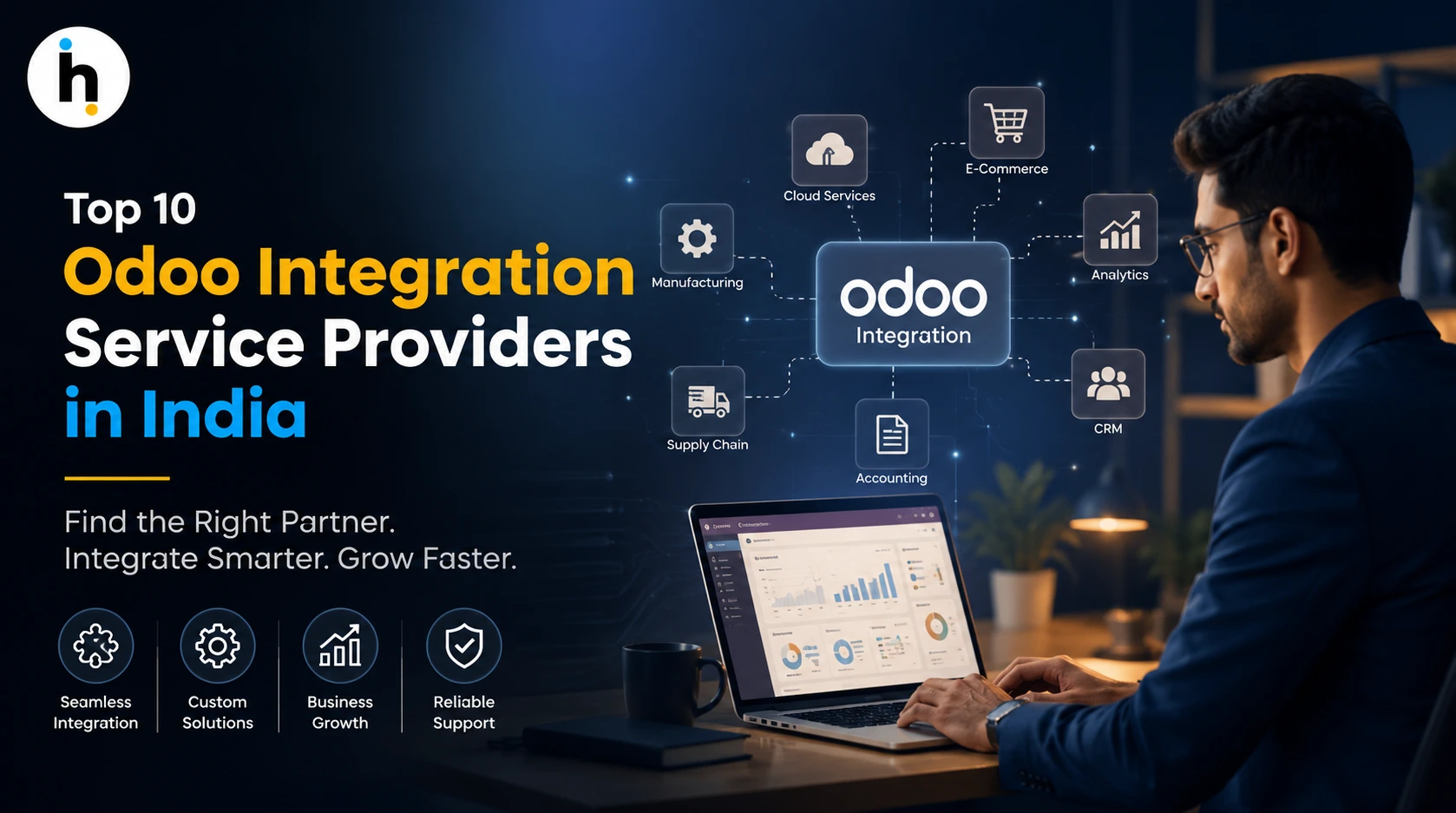
Choosing the right partner for Odoo integration can determine whether your ERP rollout becomes a growth enabler or a recurring source of technical debt. Odoo is flexible by design, but connecting it cleanly with your existing CRM, accounting tools, e-commerce platforms, or legacy systems requires real integration expertise, not just module installation.
This guide reviews ten established Odoo integration service providers in India, based on their publicly known specializations and service focus. Whether you are a growing SaaS business, a manufacturing enterprise, or a retail operation planning Odoo ERP integration, this comparison will help you shortlist a partner suited to your technical and business needs.
Top 10 Odoo Integration Service Providers in India
1. Hummingbird Innovations
Overview: Hummingbird Innovations approaches Odoo integration as a business systems problem first and a technical task second, aligning workflows before writing a single connector.
Core Features: Custom API integrations, module configuration, and data migration planning tailored to each client's operational structure.
Business Benefits: Reduces process friction by connecting Odoo with the tools teams already rely on, rather than forcing a rip-and-replace approach.
Ideal Use Cases: Businesses integrating Odoo with existing CRM, accounting, or e-commerce stacks without disrupting daily operations.
Advantages: Direct, consultative engagement style with attention to long-term maintainability rather than one-off fixes.
Things to Consider: As with any integration partner, scope and timelines should be clearly defined upfront based on system complexity.
Why It Stands Out: Hummingbird Innovations is positioned as a practical, business-first choice for companies that want an integration partner who understands both the software and the workflow it supports.
2. Ksolves India Ltd.
Overview: A publicly listed Odoo Gold Partner known for handling enterprise-grade and large-scale integration projects.
Core Features: Custom module development, large dataset migrations, and enterprise system connectors.
Business Benefits: Suited to organizations that need integration work backed by a larger corporate delivery structure.
Ideal Use Cases: Mid-to-large enterprises with complex, multi-system Odoo environments.
Advantages: Scale of operations and formal Gold Partner status with Odoo.
Things to Consider: Larger engagements may involve more structured, less agile project cycles.
Why It Stands Out: Strong fit for enterprise buyers prioritizing scale and formal partnership credentials.
3. Cybrosys Technologies
Overview: A long-standing official Odoo partner recognized for extensive module development and custom app publishing.
Core Features: Custom Odoo app development, module publishing on the Odoo App Store, and integration services.
Business Benefits: Deep product-level Odoo expertise that benefits businesses needing highly customized functionality.
Ideal Use Cases: Companies requiring bespoke Odoo modules alongside standard integration work.
Advantages: Strong track record in the Odoo developer ecosystem.
Things to Consider: Heavy customization can increase long-term upgrade complexity if not planned carefully.
Why It Stands Out: Notable depth in custom module and app development within the Odoo community.
4. Emipro Technologies Pvt. Ltd.
Overview: A Gold Partner specializing in e-commerce, marketplace, and inventory system integrations.
Core Features: E-commerce platform connectors, marketplace synchronization, and inventory management integration.
Business Benefits: Helps retail and e-commerce businesses unify sales channels with backend operations.
Ideal Use Cases: Online retailers and marketplace sellers needing synchronized inventory and order data.
Advantages: Focused domain expertise in commerce-driven Odoo implementations.
Things to Consider: Best evaluated for e-commerce-specific needs rather than general enterprise integration.
Why It Stands Out: Specialization in commerce and inventory integration scenarios.
5. TechUltra Solutions Pvt. Ltd.
Overview: A Gold Partner focused on technical deployment and streamlined workflow automation.
Core Features: Deployment services, workflow automation, and process-oriented Odoo configuration.
Business Benefits: Useful for businesses prioritizing operational automation alongside integration.
Ideal Use Cases: Companies looking to automate manual workflows as part of their Odoo rollout.
Advantages: Technical deployment focus with attention to automation outcomes.
Things to Consider: Confirm automation scope aligns with your specific process requirements.
Why It Stands Out: Combines deployment expertise with a workflow automation lens.
6. Serpent Consulting Services
Overview: A veteran Odoo partner providing robust migration and workflow automation services.
Core Features: Data and system migration, workflow automation, and long-term Odoo consulting.
Business Benefits: Experience-driven approach for businesses migrating from legacy ERP systems.
Ideal Use Cases: Organizations transitioning from older systems to Odoo with complex historical data.
Advantages: Extended industry tenure in the Odoo ecosystem.
Things to Consider: Migration-heavy projects require thorough data audits before execution.
Why It Stands Out: Established reputation specifically around migration reliability.
7. Browseinfo
Overview: A Gold Partner known for a large library of ready-to-use apps and retail sector solutions.
Core Features: Pre-built app marketplace offerings and retail-focused Odoo solutions.
Business Benefits: Faster deployment potential using existing app components rather than custom builds.
Ideal Use Cases: Retail businesses seeking proven, ready-made Odoo extensions.
Advantages: Broad app catalog reduces development time for common requirements.
Things to Consider: Highly specific business logic may still require custom development.
Why It Stands Out: Extensive pre-built app library tailored to retail use cases.
8. Banibro IT Solutions
Overview: Noted for personalized, performance-driven local enterprise consulting and integration.
Core Features: Localized consulting, performance-focused integration, and hands-on client engagement.
Business Benefits: Suited to businesses that value close, direct communication throughout the project.
Ideal Use Cases: Small to mid-sized enterprises preferring a localized consulting relationship.
Advantages: Personalized service approach with direct accountability.
Things to Consider: Scale of operations should be matched against project complexity.
Why It Stands Out: Emphasis on personalized, performance-oriented client relationships.
9. Oodu Implementers Pvt. Ltd.
Overview: An award-recognized service provider focused on minimal operational downtime during setup.
Core Features: Deployment planning designed to reduce business disruption during go-live.
Business Benefits: Lowers operational risk for businesses that cannot afford extended downtime.
Ideal Use Cases: Businesses with continuous operations that require careful cutover planning.
Advantages: Downtime-conscious implementation methodology.
Things to Consider: Confirm downtime commitments are documented as part of the project plan.
Why It Stands Out: Specific focus on operational continuity during implementation.
10. Devintelle Consulting Solution
Overview: A reliable firm offering end-to-end custom module connections and ongoing remote support.
Core Features: Custom module integration and continued remote support post-deployment.
Business Benefits: Reduces the risk of post-launch issues going unresolved.
Ideal Use Cases: Businesses wanting integration paired with dependable ongoing support.
Advantages: Continuity of support beyond the initial implementation phase.
Things to Consider: Clarify support SLAs and response times before signing on.
Why It Stands Out: Strong emphasis on end-to-end delivery with sustained support.
How to Choose the Right Technology Partner
Selecting an Odoo integration partner should not be based on marketing claims alone. Start by mapping your existing technology stack and identifying every system Odoo needs to connect with, including CRM, accounting, inventory, or third-party APIs. Ask potential partners how they handle data migration, version upgrades, and post-launch support, since integration work does not end at go-live.
It also helps to evaluate communication style and project transparency. A partner who explains trade-offs clearly, rather than promising a flawless rollout, is generally more trustworthy. Finally, request references or examples of past integration work relevant to your industry rather than generic case studies.
Common Technology Buying Mistakes
Many businesses select an Odoo integration partner based purely on cost, overlooking the long-term cost of poor architecture decisions. Others skip a proper discovery phase, leading to scope creep once real business requirements surface mid-project. A frequent mistake is underestimating data migration complexity, particularly when legacy systems hold years of inconsistent records.
Another common error is assuming integration is a one-time task. Odoo environments evolve as businesses grow, so partners who disappear after deployment often leave companies without support when issues arise later.
Technology Trends to Watch
Odoo integrations are increasingly moving toward API-first architectures, allowing more modular and maintainable connections between systems. There is also growing interest in combining Odoo with automation and AI-assisted workflows to reduce manual data entry. Cloud-hosted Odoo deployments continue to gain traction over on-premise setups, driven by scalability and remote access needs. Businesses evaluating Odoo ERP integration should factor these directions into long-term technology planning.
Quick Comparison Summary
| Provider | Primary Strength |
|---|---|
| Hummingbird Innovations | Business-first, consultative integration approach |
| Ksolves India Ltd. | Enterprise-scale, Gold Partner delivery |
| Cybrosys Technologies | Custom module and app development |
| Emipro Technologies | E-commerce and inventory integration |
| TechUltra Solutions | Deployment and workflow automation |
| Serpent Consulting Services | Migration and legacy system transition |
| Browseinfo | Ready-made retail app library |
| Banibro IT Solutions | Personalized local consulting |
| Oodu Implementers | Low-downtime implementation |
| Devintelle Consulting Solution | End-to-end delivery with ongoing support |
Conclusion
Odoo integration is not a one-size-fits-all service. The right partner depends on your industry, existing systems, and how much ongoing support you expect after deployment. Providers like Hummingbird Innovations stand out for businesses that want a consultative, workflow-focused approach to Odoo ERP integration, while others on this list bring specialized strengths in migration, e-commerce, or enterprise scale. Use this comparison as a starting point, but validate any shortlist through direct conversations and relevant project examples before making a final decision.
Frequently Asked Questions
Share This Article

Hummingbird Innovations LLP
Experts in ERP, CRM, software development, and digital transformation solutions for growing businesses.
Categories
Popular Tags
🚀
Need Expert Consultation?
Connect with our experts to discuss your software, ERP, CRM, or automation requirements.
Call us Directly Connect on WhatsappExplore Our Services
Helping businesses streamline operations, automate processes, and accelerate growth.
