Odoo for Logistics Companies: Managing Fleet, Routes & Invoicing
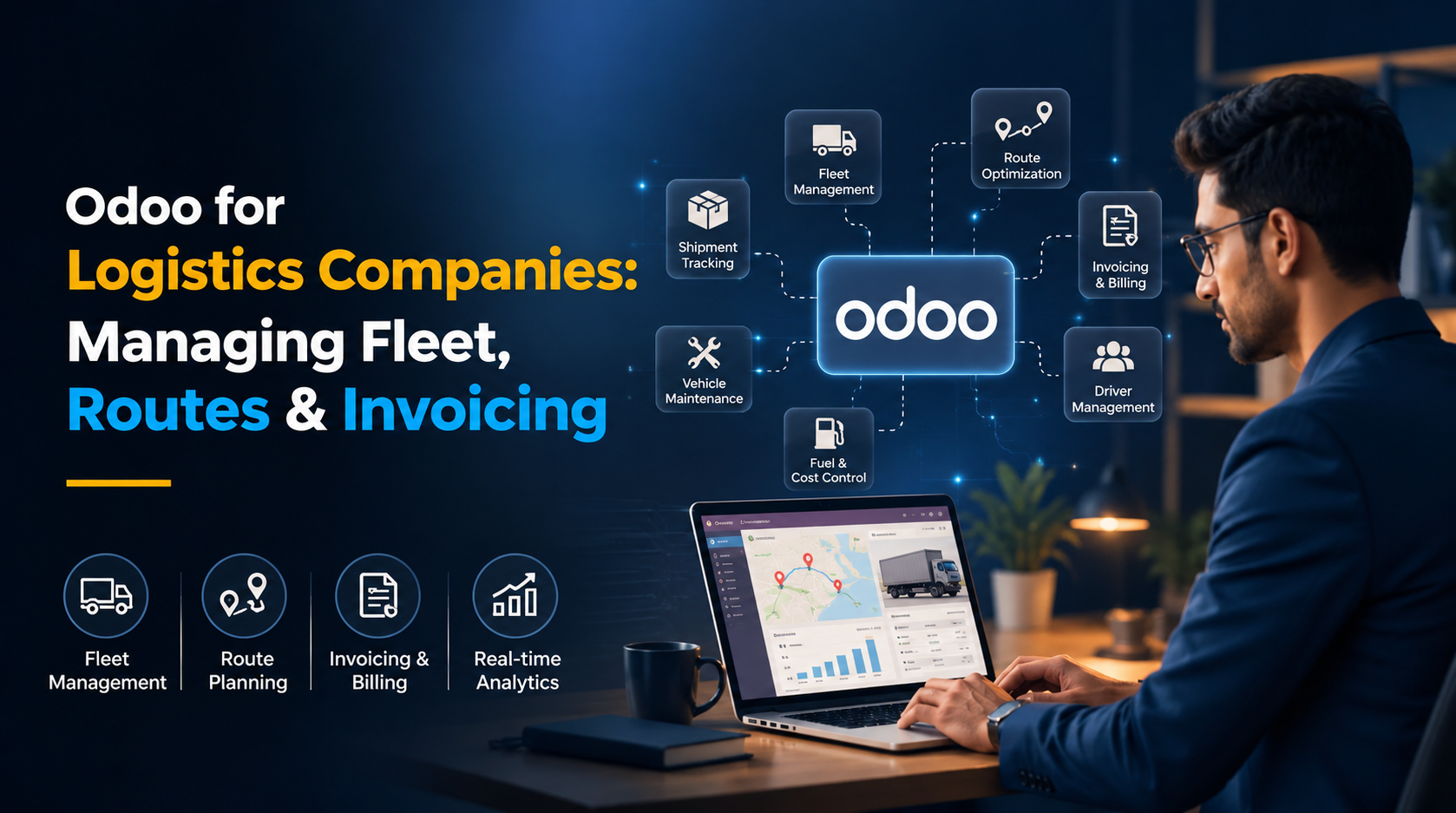
Logistics companies operate under constant pressure to deliver goods on time, control fuel expenses, maintain vehicles, and keep customers informed. At the same time, managing driver schedules, route changes, delivery records, and invoices across separate systems can create unnecessary delays. Even a small administrative mistake can affect delivery timelines and profit margins. This is where Odoo ERP can make a practical difference. By connecting fleet management, route planning, sales, accounting, and customer information in one platform, logistics businesses can improve visibility across their daily operations. For growing companies in Bangalore and across India, a well-planned Odoo solution can help simplify processes without adding complexity to the workflow.
Why Logistics Companies Need an Integrated ERP System
Many logistics businesses still depend on spreadsheets, phone calls, and disconnected software to coordinate deliveries. These methods may work for a small operation, but they become difficult to maintain as shipment volumes increase.
For example, a dispatcher might update a delivery schedule in one spreadsheet while the accounts team waits for confirmation before preparing an invoice. If the delivery status changes, someone must communicate that information manually. Delays and incorrect records become more likely.
An integrated ERP system brings operational and financial information together. With Odoo, companies can connect relevant business functions, reduce repetitive data entry, and give teams access to consistent information. The goal is not simply to digitise paperwork — it is to create a reliable process from booking a shipment to completing delivery and collecting payment.
1. Managing Fleet Operations with Odoo ERP
Vehicle availability, maintenance schedules, fuel expenses, insurance renewals, and repair records all affect logistics profitability. Without organised fleet records, managers may struggle to understand the actual cost of operating each vehicle. Odoo's fleet management capabilities can help businesses maintain vehicle information, track service activities, organise contracts, and record vehicle-related expenses, depending on the installed version and configuration.
Keep Vehicle Records in One Place
A central fleet database allows authorised employees to review vehicle details, registration information, assigned drivers, service history, and associated costs. Instead of searching through paper files, managers can access organised records when making operational decisions.
Plan Maintenance Before Breakdowns Occur
Unexpected vehicle breakdowns can lead to missed delivery windows and additional repair costs. By maintaining service schedules and recording maintenance history, businesses can plan inspections and routine servicing more effectively. For example, a transport company operating 30 delivery vehicles could use scheduled maintenance records to identify upcoming service requirements and coordinate vehicle availability with dispatchers. However, automated alerts, odometer-based reminders, telematics, and live vehicle tracking may require additional configuration or third-party integration.
2. Improving Route Planning and Delivery Coordination
Route planning directly influences fuel consumption, driver productivity, delivery times, and customer satisfaction. A poorly planned route can leave vehicles travelling unnecessary distances or reaching customers outside their preferred delivery windows. Odoo can support delivery coordination by connecting orders, customer addresses, delivery operations, and inventory information. More advanced route optimisation can be added when the business requires features beyond standard workflows.
Reduce Unnecessary Travel
Consider a distributor delivering products to several locations across Bangalore. If orders, delivery addresses, and vehicle availability are managed separately, dispatchers may spend valuable time coordinating the schedule manually. A connected system can provide a clearer picture of pending deliveries and help employees organise dispatch activities. When integrated with a suitable mapping or route-optimisation service, it may also support route sequencing based on distance, traffic data, vehicle capacity, or delivery time windows.
Monitor Delivery Progress
Delivery status updates help customer service teams respond to enquiries without repeatedly contacting drivers. Depending on the configuration, businesses can connect delivery operations with mobile applications, GPS systems, or proof-of-delivery tools. For companies with specialised requirements, Odoo customisation can introduce additional fields, approval steps, delivery workflows, or dashboards. The right solution depends on the company's fleet size, delivery model, and existing technology.
3. Simplifying Logistics Invoicing and Payments
Accurate invoicing is essential for maintaining cash flow. Logistics companies may charge customers according to shipment weight, distance travelled, vehicle type, delivery frequency, handling requirements, or additional services. When these charges are calculated manually, billing errors and delayed invoices can become common.
Connect Deliveries with Billing
Odoo can link sales orders, service records, and accounting workflows so that teams can prepare invoices using relevant business information. The precise automation available depends on the modules selected and how billing rules are configured. For instance, a company providing regular transportation services can establish a consistent process for recording completed jobs, applying agreed charges, and generating customer invoices. Additional rules may be needed for fuel surcharges, waiting charges, tolls, partial deliveries, and customer-specific contracts.
Improve Payment Visibility
Connected accounting records help finance teams review outstanding invoices, payment status, and customer balances. Managers can use this information to follow up on overdue payments and understand which accounts require attention. Automated invoice generation does not eliminate the need to verify rates, taxes, delivery completion, and contractual terms — appropriate checks remain important, particularly for businesses managing high shipment volumes.
4. Connecting Customer Relationships with Odoo CRM
Logistics companies need to manage more than deliveries. They must also handle enquiries, prepare quotations, follow up with prospects, and maintain relationships with existing customers. Odoo CRM helps organise leads, sales opportunities, customer interactions, and follow-up activities. When connected with sales and invoicing workflows, it gives teams a more complete view of the customer relationship.
Sales representatives can review previous quotations and identify upcoming opportunities, while managers can monitor the sales pipeline. For example, if a manufacturer requests a monthly transportation contract, the sales team can track the enquiry, prepare a quotation, and move the opportunity through the sales process. Once the agreement is confirmed, the relevant information can feed into operational workflows — reducing the gap between winning a contract and delivering the service.
5. Odoo Implementation, Customisation, and Integration
Every logistics business has different operating requirements. A local courier service may prioritise delivery tracking, while a large transporter may need complex pricing, subcontractor management, and multi-warehouse coordination. A successful Odoo implementation begins with understanding these differences.
Start with Business Requirements
Document the current processes for booking, dispatch, fleet maintenance, delivery confirmation, invoicing, and payment collection. Identify repeated manual tasks and the problems employees face every day. Then select the Odoo modules and workflows that address those needs. Avoid adding features simply because they are available.
Customise Only Where Necessary
Odoo ERP customisation can accommodate specialised requirements, such as customer-specific freight calculations, approval workflows, transport cost allocation, or customised operational reports. Working with an experienced Odoo customisation company helps businesses distinguish between standard features, configuration changes, and genuinely necessary development. This approach can reduce maintenance overhead and make future upgrades easier.
Integrate Existing Business Tools
Companies may already use GPS tracking platforms, payment gateways, warehouse systems, e-commerce stores, or external accounting tools. Odoo integration can connect suitable applications and reduce duplicate data entry. For businesses selling logistics-related products online, an Odoo Shopify integration may also help connect e-commerce orders with inventory and financial workflows.
Plan Data Migration Carefully
Businesses moving from spreadsheets or legacy software need to preserve important information, including customer records, vehicle details, outstanding invoices, and transaction histories. Odoo migration should include data cleaning, field mapping, testing, and reconciliation before the new system goes live.
6. Understanding Odoo Pricing and Implementation Costs in India
The cost of implementing Odoo depends on several factors, including the chosen edition, number of users, required applications, custom development, integrations, data migration, and ongoing support. Odoo Open Source options may suit some businesses, while others may need additional enterprise features or services. When comparing Odoo pricing in India, businesses should evaluate the complete cost rather than the subscription alone.
An Odoo implementation company should explain the expected expenses for configuration, development, training, deployment, and maintenance. Ask for a clear project scope, milestone-based delivery plan, and estimates for future changes. Odoo Support AMC (Annual Maintenance Contract) arrangements may also help businesses budget for technical assistance, troubleshooting, and system maintenance.
7. Choosing the Right Odoo Partner
Technology alone does not guarantee better logistics management. Results depend on how well the system reflects real business processes and whether employees can use it confidently. Look for a partner that understands operational workflows, documents requirements clearly, tests critical scenarios, and provides training after deployment. Ask how it handles integrations, data security, upgrades, and ongoing support.
For companies in Bangalore and elsewhere in India, the right implementation partner should offer a realistic plan based on operational needs rather than promise instant automation. Businesses can also review Odoo integration services, migration support, and Odoo Support AMC from Hummingbird Innovations.
Conclusion
Odoo can help logistics companies connect fleet records, delivery coordination, customer relationships, and invoicing within a more organised business environment. Its value comes from reducing fragmented information, improving visibility, and creating consistent workflows across departments. With expert Odoo Implementation, Odoo Customisation, and Odoo Integration from Hummingbird Innovations, businesses in Bangalore and across India can streamline operations. The best starting point is to identify operational bottlenecks, choose suitable modules, and implement improvements in manageable stages. With thoughtful configuration and reliable Odoo Support AMC, logistics businesses can build a scalable system that grows alongside their operations. To discuss your requirements, contact Hummingbird Innovations and explore the available Odoo services.
Frequently Asked Questions
Share This Article

Hummingbird Innovations LLP
Experts in ERP, CRM, software development, and digital transformation solutions for growing businesses.
Categories
Popular Tags
🚀
Need Expert Consultation?
Connect with our experts to discuss your software, ERP, CRM, or automation requirements.
Call us Directly Connect on WhatsappExplore Our Services
Helping businesses streamline operations, automate processes, and accelerate growth.
